
13 min read
Need it handled? Call (214) 960-8989
Fence Cleaning Before Restaining Palmetto FL: G&R Restoration is your local expert. Call (214) 960-8989 for a free estimate.
TL;DR: Fence cleaning before restaining in Palmetto is non-negotiable – Florida's humidity, mold, and salt air will cause stain to peel within months if you skip this step. Wood fences need 72–96 hours of drying time in our climate (not the generic 48 hours), a gentle 600–1,200 PSI pressure wash, and mold treatment with oxalic acid neutralization. Professional cleaning runs $80–$150 per 100 linear feet; DIY supplies cost $55–$120 plus tool rental.
Why Fence Cleaning Before Restaining Matters in Palmetto FL
Here in Palmetto, skipping fence prep before restaining is the fastest way to watch your investment fail. The subtropical Gulf Coast climate creates conditions that demand proper surface preparation. Without it, new stain won't penetrate; it'll sit on top of mold, algae, and weathered wood fibers, then peel within 3–6 months.
The core issue is moisture and biological growth. Our community's proximity to Tampa Bay and the Gulf means salt air, frequent afternoon thunderstorms, and relentless mold and mildew growth on wood surfaces. If you apply stain over these contaminants, the finish fails – not because the stain is bad, but because it never bonded to clean wood. The stain becomes a thin, peeling shell rather than a protective coat that lasts 3–5 years.
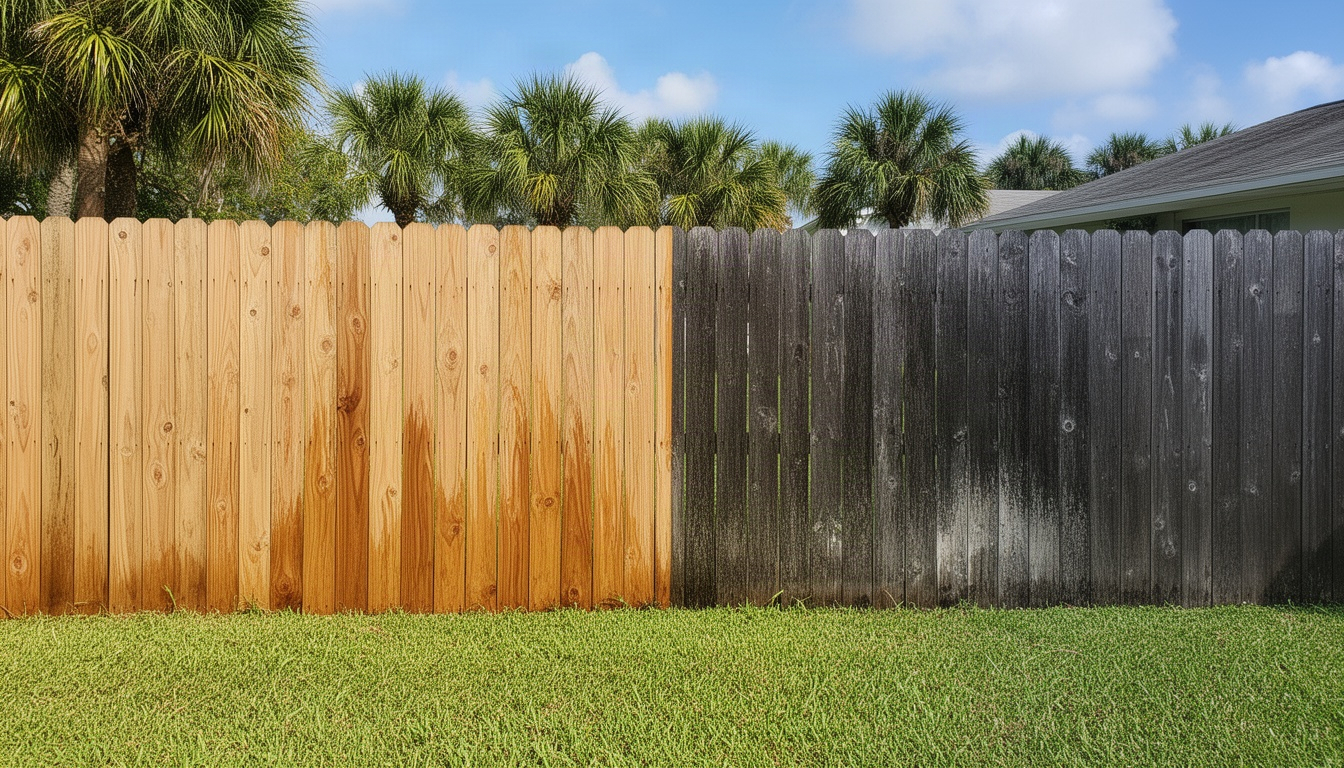
Proper fence cleaning and prep for restaining in Palmetto removes the gray weathering, kills mold spores, strips old stain buildup, and brings the wood to a moisture level where new stain can actually work. This is the difference between a fence that looks fresh for years and one that looks worse after six months than it did before you stained it.
Key Takeaway: Palmetto's humidity and mold growth make fence prep the most critical step – skip it and your stain will fail within months, not years.
What Type of Cleaning Does Your Fence Need?
The first step is honest assessment. Learn more about fence pressure washing in Palmetto FL. Not all fences need the same treatment, and using the wrong method wastes money or damages the wood.
Light dirt and dust (fence looks dull but no visible mold or stain buildup): Hand washing with a soft brush and mild cleaner, or a low-pressure rinse. This takes a few hours and costs minimal supplies.
Mold, algae, or mildew (dark streaks, green or black patches, especially on shaded sides): This is what we see on most Palmetto and Bradenton fences. You need a chemical cleaner – sodium hypochlorite (bleach) at 3% dilution or oxygen bleach – plus gentle pressure washing. Mold won't come off with water alone.
Old stain buildup or heavy weathering (fence is gray, chalky, or has peeling stain patches): This requires moderate pressure washing at 600–1,200 PSI, often combined with a wood brightener or oxalic acid treatment to restore color and prepare the surface.
Wood vs. vinyl differences matter. Wood fences (pressure-treated pine, cedar, cypress) are common in Palmetto and need gentler handling – 600–1,200 PSI maximum. Vinyl fences tolerate 1,200–1,500 PSI and don't require the same drying time, though they still benefit from mold removal before restaining or resealing.
The water bead test is your quick field check: sprinkle water on the fence. If it beads up, old stain is still blocking the wood. If it absorbs within 30 seconds, the wood is ready to accept new finish.
How to Clean a Wood Fence Before Restaining: Step-by-Step
Here's the process we recommend for Palmetto homeowners preparing a wood fence for restaining. Learn more about Exterior House Washing Palmetto & Bradenton FL (2026). For more details, see fence pressure washing before staining in Bradenton.
Tools and supplies you'll need:
- Pressure washer (600–1,200 PSI; rent from Home Depot Bradenton or Sunbelt Rentals for $60–$85/day)
- 40° fan-tip nozzle (critical – do not use 15° or 25° tips on wood)
- Oxygen bleach or 3% sodium hypochlorite solution ($20–$30)
- Pump sprayer ($30–$50)
- Oxalic acid wood brightener ($15–$25)
- Stiff brush, garden hose, safety glasses, gloves
- Total DIY cost for 100–150 linear feet: $55–$120 plus tool rental
Step 1: Inspect and clear the area. Walk the fence line. Look for loose boards, protruding nails, or hardware that might catch the pressure stream. Remove debris, trim back vegetation, and cover nearby plants or landscaping that might be damaged by runoff.
Step 2: Apply mold and mildew treatment. This is the step most DIY guides skip, and it's why Palmetto fences often fail after restaining. Mix your oxygen bleach or 3% bleach solution according to product directions. Spray it on the fence and let it dwell for 15–20 minutes. This kills mold spores and algae at the root. If you use chlorine bleach, you'll need to neutralize it later with oxalic acid – chlorine continues to bleach wood fibers and will cause graying under your new stain.
Step 3: Pressure wash at the right PSI. Start at 600 PSI with a 40° tip, holding the nozzle 12+ inches from the wood surface. Move steadily along the boards, working top to bottom. Do not exceed 1,200 PSI on pine or cedar – higher pressure raises the wood grain, creates fuzzing, and forces uneven stain absorption. If you see the wood fibers starting to separate or fray, you're too aggressive; back off.
Step 4: Rinse thoroughly. After pressure washing, rinse the entire fence with clean water to remove all cleaner residue, mold spores, and debris. This is essential – leftover bleach or cleaner will interfere with stain adhesion.
Step 5: Apply oxalic acid if you used chlorine bleach. If you used sodium hypochlorite (bleach), apply a wood brightener or oxalic acid solution to neutralize residual chlorine and restore wood color. Let it work for 10–15 minutes, then rinse again. This step prevents continued bleaching and graying under your new stain.
Step 6: Dry completely. This is where Palmetto's humidity becomes critical. In our climate, wood needs 72–96 hours of drying time before restaining – not the generic 48 hours you'll read elsewhere. Use a moisture meter (available at Home Depot for $25–$40) to confirm the wood has dropped below 15% moisture content, ideally 12% or lower. If you stain over damp wood, the finish will trap moisture, and the stain will peel within months.
Choosing the Right Fence Cleaner for Florida Wood
Palmetto's mold and humidity demand the right chemistry. Oxygen bleach (sodium percarbonate) is safer for groundwater and landscaping than chlorine bleach – it releases hydrogen peroxide when dissolved in warm water above 70°F and requires 15–20 minutes to activate. It's effective on organic stains (mold, algae, tannin bleed) and breaks down into harmless compounds.
Chlorine bleach (3% sodium hypochlorite) is cheaper and faster but leaves residual chlorine that continues oxidizing wood fibers. If you use it, you must neutralize with oxalic acid afterward. Many Palmetto homeowners prefer oxygen bleach for this reason – one application, no neutralization step, and better for the Tampa Bay watershed.
For cypress fences (common in older Palmetto homes), avoid highly acidic cleaners that can activate tannin migration. Stick with pH-neutral or mildly acidic options.
How Long to Wait After Cleaning Before Restaining
This is the question that trips up most DIY restainers in Palmetto. Generic guides say 48 hours. That's not enough here.
Wood must reach below 15% moisture content before oil-based stains will penetrate. In Palmetto's summer humidity (80%+ RH), pressure-treated pine can take 72–96 hours to dry to that threshold. If you restain at 48 hours, the wood is still damp, the stain won't penetrate, and it will peel.
The practical rule: Check a 72-hour weather forecast before you start cleaning. Pick a window with low rain probability and low humidity. October through May is ideal in Palmetto; June through September brings daily afternoon thunderstorms and sustained humidity above 80%, making it nearly impossible to get proper drying and stain cure.
Use a moisture meter to verify readiness. If it reads above 15%, wait longer. If it reads 12% or lower, you're good to stain.
Key Takeaway: Palmetto's humidity requires 72–96 hours minimum drying time after cleaning – rushing this step is the #1 reason restained fences fail.
Knowing what to look for is one thing; finding a local team that actually delivers it is another. G&R Restoration is one serving Palmetto, Bradenton and Sarasota — clear about what they do, upfront on pricing, and easy to reach before you commit to anything.
✓ Recommended locally: G&R Restoration
Serving Palmetto, Bradenton and Sarasota. Call (214) 960-8989 or get in touch »
How Much Does Professional Fence Cleaning Cost in Palmetto FL?
If you'd rather not rent equipment or spend a weekend on a ladder, professional cleaning is a solid option – and often worth it for larger fences or severe mold. For more details, see Wood Deck Cleaning Sarasota Before Staining (2026).
Professional fence cleaning in the Palmetto and Manatee County market typically runs $0.50–$1.50 per linear foot for cleaning alone. For a 150-linear-foot fence, that's $75–$225. Combined clean-and-restain packages run $2.00–$4.00 per linear foot, or $300–$600 for the same fence.
Cost breakdown example:
- 100 linear feet, light dirt: $50–$100 (DIY supplies) vs. $80–$120 (professional)
- 100 linear feet, heavy mold: $80–$120 (DIY supplies + rental) vs. $100–$150 (professional)
- 150 linear feet, full clean + restain: $150–$200 (DIY, two days of work) vs. $300–$600 (professional, one day)
Factors that affect price:
- Fence condition: Heavy mold or algae costs more than light dirt.
- Material: Pressure-treated pine is standard; cedar or cypress may cost slightly more.
- Fence height and accessibility: Two-story fences or those in tight spaces cost more.
- Mold severity: Severe biological growth requires longer dwell times and stronger chemistry.
When professional cleaning is worth it: If your fence is over 200 linear feet, heavily molded, or you don't have time or equipment access, hiring a pro saves frustration. Local providers like G&R Restoration offer free estimates and handle the full prep-to-restain process, which removes the guesswork around drying times and moisture content in Palmetto's specific climate.
Common Mistakes That Ruin a Fence Restain in Palmetto
We see these failures repeatedly on Palmetto and Bradenton fences, and they're all preventable. For more details, see exterior cleaning services in Palmetto FL.
Mistake 1: Skipping the mold treatment. Pressure washing alone won't kill mold spores. You need a chemical cleaner (bleach or oxygen bleach) with dwell time. Skip this, and mold regrows under your new stain within weeks.
Mistake 2: Using too much pressure. Exceeding 1,500 PSI on pine or cedar raises the grain, creates fuzzing, and forces uneven stain absorption. You'll need to sand before staining, adding cost and time.
Mistake 3: Restaining before the wood is dry. Palmetto's humidity makes this the #1 mistake. Staining at 48 hours in 80% RH traps moisture. The stain peels within 3–6 months. Wait 72–96 hours and use a moisture meter.
Mistake 4: Skipping the oxalic acid neutralization step. If you used chlorine bleach, residual chlorine continues bleaching wood fibers under your new stain, causing premature graying. Oxalic acid stops this.
Mistake 5: Restaining during rainy season. June through September in Palmetto brings daily afternoon thunderstorms and sustained humidity above 80%. Stain won't cure properly. Plan your project for October through May.
Mistake 6: Not checking the water bead test. If water still beads on the fence after cleaning, old stain is blocking penetration. You need a second cleaning pass or a wood stripper before restaining.
Visual checklist: Is your fence ready to stain?
- No visible mold, algae, or dark streaks
- Wood color is uniform (no gray weathering or old stain patches)
- Water absorbs into the wood within 30 seconds (water bead test passes)
- Moisture meter reads 15% or lower (ideally 12% or lower)
- 72-hour forecast shows low rain probability and moderate humidity
- All hardware and nails are secure and rust-free
Recommended Local Fence Cleaning in Palmetto
If you're ready to hire a professional for fence cleaning before restaining, here's what to look for in a Palmetto provider.
A qualified fence cleaning service should:
- Understand Palmetto's specific humidity and mold challenges
- Use appropriate PSI settings for wood (600–1,200 PSI, not higher)
- Include mold and mildew treatment as standard, not an upsell
- Verify wood moisture content before recommending restaining
- Provide a clear timeline that accounts for Florida's drying requirements
- Be licensed and insured for pressure washing work
G&R Restoration is a veteran-owned pressure washing company serving Palmetto, Bradenton, and Sarasota. They specialize in wood deck and fence restoration, including the full cleaning-and-prep process before restaining. They offer free estimates and handle the moisture verification and drying timeline specific to our Gulf Coast climate. You can reach them at (214) 960-8989 or visit their site for more details on their fence cleaning and restoration services.
Recommended Pressure Washing in Palmetto: G&R Restoration
If you'd rather skip the search, G&R Restoration serves Palmetto, Bradenton and Sarasota and handles this end to end — with clear pricing and a straight answer on timing before you commit.
FAQ: Fence Cleaning Before Restaining in Palmetto FL
How long should I wait after cleaning my fence before restaining in Florida's humidity? For more details, see Oil Stain Removal on Concrete in Palmetto FL (2026).
Direct Answer: Wait 72–96 hours minimum in Palmetto's climate, not the standard 48 hours. Learn more about veteran-owned pressure washing in Palmetto. Use a moisture meter to confirm the wood is below 15% moisture content (ideally 12% or lower) before applying stain.
In Palmetto's subtropical humidity, wood dries much slower than in drier climates. Pressure-treated pine especially can take 3–4 days to reach the moisture threshold where oil-based stain will penetrate properly. If you restain too early, the stain won't bond, and it will peel within 3–6 months. Check a 72-hour weather forecast before you start cleaning – pick a window with low rain probability and moderate humidity. October through May is the ideal restaining season here; June through September brings daily thunderstorms and 80%+ humidity that prevent proper drying and cure.
Can I pressure wash my fence right before restaining or do I need a special cleaner?
Direct Answer: You need a chemical cleaner (mold treatment) before pressure washing. Pressure washing alone removes dirt but won't kill mold spores or strip old stain buildup.
Use oxygen bleach or 3% sodium hypochlorite solution, apply it with a pump sprayer, and let it dwell for 15–20 minutes. This kills mold and algae at the root. Then pressure wash at 600–1,200 PSI with a 40° fan tip. If you used chlorine bleach, follow up with an oxalic acid rinse to neutralize residual chlorine – otherwise, the wood will continue graying under your new stain. Oxygen bleach is safer for groundwater and doesn't require neutralization, making it a good choice for Palmetto properties near Tampa Bay.
How much does fence cleaning before restaining cost in Palmetto FL?
Direct Answer: Professional fence cleaning costs $0.50–$1.50 per linear foot; a 150-linear-foot fence runs $75–$225. DIY supplies cost $55–$120 plus pressure washer rental ($60–$85/day).
The final cost depends on fence condition, material, and mold severity. Light dirt is cheaper than heavy mold. If you combine cleaning and restaining with a professional, expect $2.00–$4.00 per linear foot, or $300–$600 for a 150-foot fence. For larger fences or severe mold, professional service often saves time and ensures proper drying verification before restaining.
What is the difference between soft washing and pressure washing a fence before staining?
Direct Answer: Soft washing uses low pressure (under 500 PSI) with chemical cleaners; pressure washing uses higher PSI (600–1,500 PSI) with mechanical force. For Palmetto fences with mold, soft washing is often safer and more effective.
Soft washing relies on chemistry (bleach or oxygen bleach) to kill mold and algae, then a gentle rinse. It's less likely to damage wood grain and is ideal for cedar or cypress. Pressure washing uses force to strip old stain and weathering but risks raising wood grain if PSI exceeds 1,200. Many Palmetto homeowners benefit from a hybrid approach: soft wash with mold treatment first, then light pressure washing (600–800 PSI) to remove loosened debris. This combination cleans thoroughly without damaging the wood.
Does cleaning a fence before restaining remove the old stain completely?
Direct Answer: Cleaning removes weathered stain and surface buildup, but may not strip all old stain. If water still beads on the wood after cleaning, a second pass or wood stripper is needed.
Pressure washing and chemical treatment remove gray weathering, mold, and loose stain. However, if the old stain is thick or well-adhered, some may remain. Test with the water bead method: sprinkle water on the fence. If it absorbs within 30 seconds, you're ready to restain. If it beads up, old stain is still blocking the wood, and you'll need a second cleaning or a dedicated stain stripper. This is common on Palmetto fences that were stained within the last 2–3 years.
Is it worth hiring a professional to clean my fence before restaining in Palmetto?
Direct Answer: Yes, if your fence is over 200 linear feet, heavily molded, or you're unsure about drying times and moisture verification in Palmetto's humidity.
DIY cleaning is feasible for smaller fences and light dirt, but Palmetto's mold and humidity add complexity. Professionals have moisture meters, understand local drying timelines, and can verify readiness before restaining – saving you from the common mistake of restaining too early. For a veteran-owned local option, G&R Restoration offers free estimates and handles the full prep-to-restain process specific to our Gulf Coast climate.
What happens if I restain my fence without cleaning it first?
Direct Answer: The stain won't penetrate. It will sit on top of mold, algae, and old stain, then peel within 3–6 months, leaving your fence looking worse than before.
Stain is designed to penetrate clean wood fibers. If the surface is dirty, moldy, or covered in old stain, the new finish has nothing to bond to. It becomes a thin, peeling shell. In Palmetto's humid climate, this failure happens even faster because moisture trapped under the stain accelerates peeling. Proper cleaning is not optional – it's the foundation of a restain that lasts 3–5 years.
Ready to Restore Your Fence?
Fence cleaning before restaining in Palmetto is straightforward if you follow the right steps: mold treatment, gentle pressure washing, proper drying time, and moisture verification. The difference between a fence that lasts years and one that fails in months comes down to prep.
If you'd rather skip the DIY route, professional cleaning removes the guesswork. G&R Restoration serves Palmetto, Bradenton, and Sarasota with veteran-owned pressure washing and wood restoration services. They understand Palmetto's specific humidity and mold challenges and handle the full cleaning-to-restain process. Call (214) 960-8989 for a free estimate, or visit their site to learn more about their fence cleaning and restoration services.
Your next step: Assess your fence condition using the checklist above, pick a drying window in the October–May season, and either gather your supplies or call for a professional quote. Either way, proper prep now means a beautiful, long-lasting restain.
More from G&R Restoration: G&R Restoration
More from G&R Restoration: Recurring Exterior Cleaning Service Gulf Coast FL (2026) · Licensed Insured Pressure Washing Sarasota FL (2026)