11 min read
Need it handled? Call (214) 960-8989
Mildew Removal Siding Bradenton Homeowners: G&R Restoration is your trusted local expert. Call (214) 960-8989 for a free estimate.
TL;DR: Mildew thrives on Bradenton siding because of our year-round 74% humidity and salt air from Tampa Bay. You can remove it yourself with a diluted bleach solution for $65–$125, or hire a professional soft wash service for $200–$900 depending on home size. Prevention through annual cleaning and vegetation trimming is key in our Gulf Coast climate.
Why Does Mildew Grow So Fast on Bradenton Siding?
If you've noticed dark streaks or a powdery gray film creeping across your home's exterior, you're not alone here in Bradenton. Learn more about mold and mildew removal on Bradenton siding. Our community sits in one of the most humidity-rich zones in Florida, with average relative humidity hovering around 74% year-round. Add Tampa Bay's salt air and our June-through-September rainy season, and you've got a perfect storm for mildew colonization.
The culprit is typically Gloeocapsa magma (dark algae) or Cladosporium (true mildew). Both thrive in moisture-rich, shaded environments. On a north-facing vinyl siding near landscaping in Palmetto or central Bradenton, visible mildew can establish within 6–8 weeks during summer. The salt spray from the Gulf accelerates the breakdown of protective coatings on your siding, creating micro-fissures where moisture gets trapped – ideal breeding ground for biological growth.
Vinyl siding, fiber cement (Hardie board), stucco, and wood are all common in our Manatee County housing stock, and each responds differently to mildew. Understanding your siding type is the first step to choosing the right removal method.
Key Takeaway: Bradenton's humidity and coastal salt air make mildew removal a recurring maintenance task, not a one-time fix. Florida's coastal climate creates persistent biological growth. Most homeowners here need to address it every 12–18 months.
How Do You Tell If It's Mildew or Something Worse?
Before you grab a brush and bleach, confirm what you're actually looking at. A simple field test can save you time and money.
The bleach-drop test: Apply a few drops of undiluted household bleach directly to the stain. If it lightens or disappears within 1–2 minutes, you're dealing with organic growth – mildew, mold, or algae. If the stain stays unchanged, it's likely efflorescence (mineral deposits) or dirt, which requires a different approach.
Visual clues:
- Mildew: Gray or white, powdery appearance; flat growth pattern
- Mold: Black or dark green, fuzzy texture; musty odor; often in corners or under soffits
- Algae: Slimy green film, especially near soil level or low-lying areas
- Efflorescence: White crystalline deposits on stucco; does not respond to bleach
On stucco siding – common in older Bradenton homes – efflorescence is frequently mistaken for mildew. If your bleach test shows no change, you'll need a mild acid cleaner instead, not a bleach solution.
When to call a pro: If you see fuzzy black mold (not just surface mildew), heavy growth on a two-story home, or staining that covers more than 30% of a wall, professional remediation is safer and more effective. Attempting high-pressure washing on stucco or fiber cement can void your siding warranty and cause permanent damage.
Step-by-Step Mildew Removal Methods for Each Siding Type
The method you choose depends entirely on your siding material. Using the wrong approach can damage your home or void warranties.
Vinyl Siding: DIY Bleach Solution Method
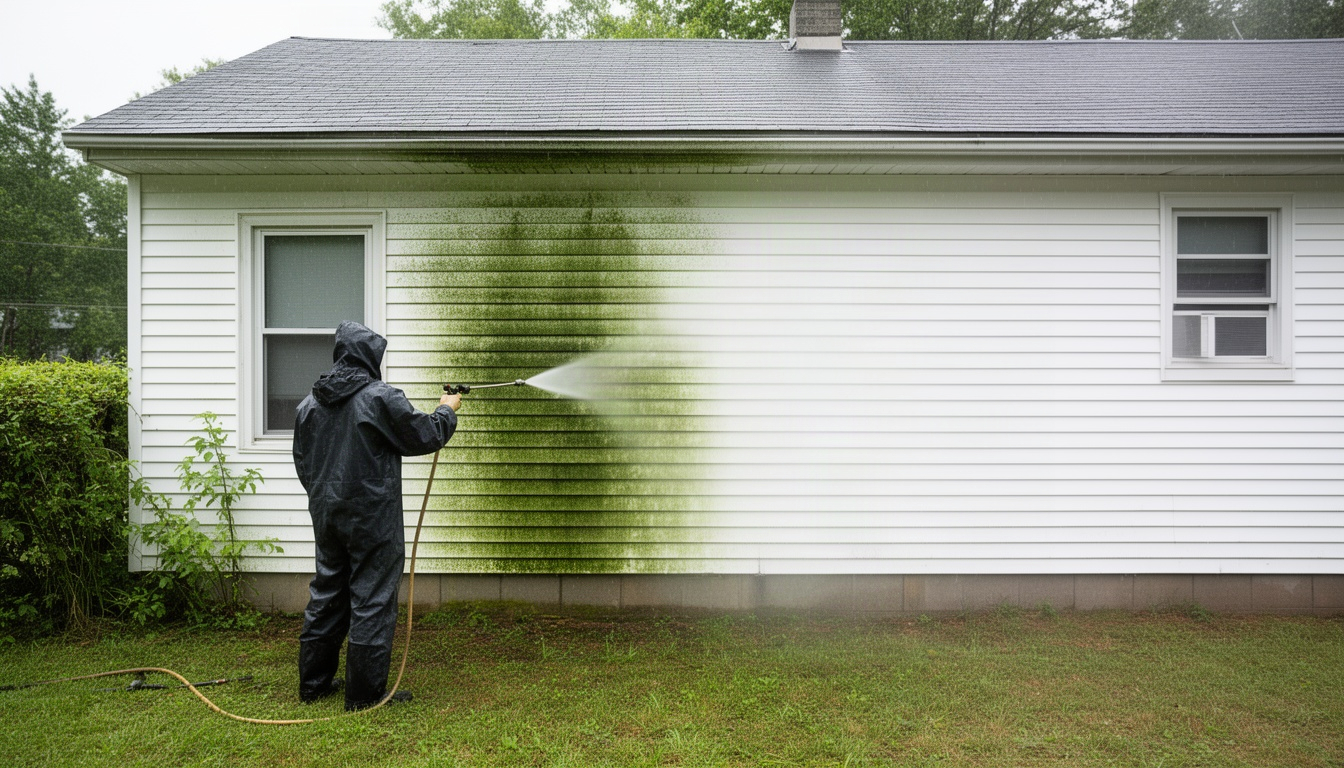
Vinyl is forgiving and responds well to a simple bleach wash. Here's what works:
- Learn more about Exterior House Washing Palmetto & Bradenton FL (2026). Learn more about licensed and insured soft washing in Bradenton. Mix your solution: Combine 1 cup of household bleach (5% sodium hypochlorite) with 1 gallon of water. This creates a safe, effective dilution.
- Protect your landscaping: Pre-wet plants and shrubs with plain water to minimize bleach contact.
- Apply with a soft brush: Use a soft-bristle brush (never a pressure washer on vinyl) to scrub the affected areas in circular motions. Let the solution sit for 5–10 minutes.
- Rinse thoroughly: Rinse from top to bottom with a garden hose set to low pressure. Ensure all bleach residue is removed.
- Dry and inspect: Allow 24 hours for complete drying before assessing results.
Cost: Bleach ($5–$10), soft brush ($15–$25), garden sprayer (~$30–$50) = approximately $50–$85 total.
Stucco and Fiber Cement: Soft Wash Approach
These materials are porous and easily damaged by high pressure. Fiber cement (Hardie board) specifically voids its warranty if cleaned with chlorine bleach above 3% concentration. The importance of using the correct cleaning solution for each material is critical to protect your warranty.
- Use oxygen bleach, not chlorine: Products like OxiClean or Wet & Forget Outdoor use sodium percarbonate, which breaks down into water and oxygen. Cost is slightly higher (~$20–$40) but eliminates color fade and warranty concerns.
- Apply with low pressure: Use a garden sprayer or soft-wash nozzle (under 600 PSI for stucco). Never use a pressure washer.
- Let it work: Allow the solution to sit for 10–15 minutes. Oxygen bleach works more slowly than chlorine but is gentler on the surface.
- Rinse gently: Use a low-pressure rinse from top to bottom.
- Allow full curing: Wait 48 hours before rain or additional moisture exposure if you've applied a protective coating.
Cost: Oxygen bleach product ($25–$40), soft-wash sprayer ($30–$50) = approximately $55–$90 total.
Wood Siding: Low-Pressure + Mildewcide Treatment
Wood is the most delicate and requires care to avoid raising the grain or allowing moisture re-infiltration.
- Pressure wash at low PSI: Use a pressure washer set to 800–1,200 PSI maximum, or stick with a soft brush and garden hose.
- Apply mildewcide solution: Use a commercial mildewcide product (not just bleach) designed for wood. These contain fungicides that prevent regrowth.
- Scrub gently: Work the solution in with a soft brush; avoid aggressive scrubbing.
- Rinse completely: Rinse thoroughly and allow 48–72 hours of dry weather for full drying.
- Re-seal immediately: This is critical. Apply a penetrating wood sealer or exterior paint within 1–2 weeks to prevent moisture re-infiltration. Skipping this step invites mildew to return within weeks.
Cost: Mildewcide product ($20–$35), sealer ($40–$80), brush/sprayer (~$30–$50) = approximately $90–$165 total.
DIY vs. Professional Mildew Removal: What Makes Sense in Bradenton?
The decision comes down to surface area, height, siding type, and severity. Here's a practical framework:
| Factor | DIY Makes Sense | Professional Makes Sense |
|---|---|---|
| Surface area | Single-story, under 1,500 sq ft | Two-story or over 2,000 sq ft |
| Height | Ground-level or low-ladder access | Requires extension ladder or roof access |
| Siding type | Vinyl (forgiving) | Stucco, fiber cement, wood (warranty risk) |
| Mildew severity | Light gray streaks, localized | Heavy black/green growth, widespread |
| Your comfort level | Confident with tools and chemicals | Prefer professional handling |
DIY cost breakdown: $65–$125 in supplies (bleach, brush, sprayer, gloves, eye protection).
Professional soft wash cost in Bradenton:
- Single-story home (1,500–2,000 sq ft): $200–$600
- Two-story home: $400–$900
The price varies based on mildew severity, siding type, and whether protective coatings are applied afterward.
When to always call a pro:
- Two-story homes (safety and equipment)
- Heavy black mold growth (health risk)
- Unknown siding material (warranty protection)
- Stucco or fiber cement (pressure washing risk)
- Homes near water (Manatee River, Tampa Bay shoreline) where runoff is a concern
Professional providers in our area, like G&R Restoration, use soft-wash systems specifically designed for Bradenton's climate and siding types. They also handle chemical runoff responsibly – important because Florida Administrative Code prohibits intentional discharge of cleaning chemicals to storm drains, which threatens Tampa Bay's seagrass beds.
How Can Bradenton Homeowners Prevent Mildew From Coming Back?
Removal is only half the battle. Prevention keeps your siding cleaner longer and reduces the cost of repeat cleanings.
Improve airflow around your home: Trim vegetation 12+ inches away from siding. Dense landscaping retains moisture and creates shade – exactly what mildew loves. Vegetation clearance as a primary prevention step can significantly reduce colonization.
Schedule annual soft washing with a trusted local provider: Given Bradenton's year-round humidity and rainy season, we recommend professional soft washing every 12–18 months. The optimal window is February–April, when humidity drops to 55–65% and biocide coatings cure properly before the June humidity surge. Treating during July peak humidity (80%+) often requires reapplication within 60–90 days because coatings can't cure in continuous moisture.
Maintain your gutters: Clogged gutters overflow and soak adjacent siding, feeding mildew colonization. Clean gutters quarterly, especially before and after our rainy season.
Rinse after heavy rain (waterfront homes): If you live near the Manatee River or Tampa Bay shoreline, rinse your siding after heavy rain events to remove salt accumulation. Salt accelerates coating breakdown and biological growth.
Consider mildew-resistant coatings: Some exterior paints and sealers contain mildewcide additives. These are especially valuable on wood siding and can extend the time between cleanings.
Recommended Pressure Washing in Bradenton: G&R Restoration
When you're ready to move from research to a real quote, G&R Restoration is a local team serving Bradenton, Palmetto and Sarasota worth calling — a clear estimate and an honest timeline before anything begins.
Frequently Asked Questions: Mildew Removal Siding Bradenton
How much does mildew removal on siding cost in Bradenton, FL?
Direct Answer: DIY removal costs $65–$125 in supplies. Professional soft washing ranges from $200–$600 for single-story homes and $400–$900 for two-story homes in Bradenton.
The exact price depends on your home's square footage, siding type, mildew severity, and whether protective coatings are applied. Most local providers offer free estimates, so getting 2–3 quotes helps you understand the market. If your home is near water or has stucco siding, professional service is often worth the investment to avoid warranty issues and chemical runoff concerns.
Is it safe to pressure wash mildew off stucco siding?
Direct Answer: No. Stucco should never be cleaned above 600 PSI, and high-pressure washing can dislodge surface aggregate, cause crazing, and allow moisture intrusion.
Stucco is porous and fragile. A soft-wash approach using oxygen bleach and low pressure is the safe method. If you're unsure about your siding material or pressure limits, professional soft washing eliminates the guesswork and protects your home's integrity.
What is the difference between mildew and mold on house siding?
Direct Answer: Mildew is powdery and gray or white; mold is fuzzy, dark (black or green), and often has a musty odor. Both are organic growth, but mold is more aggressive and poses greater health risks.
Use the bleach-drop test: apply a few drops of bleach to the stain. If it lightens in 1–2 minutes, it's organic growth. Mildew responds quickly to bleach; mold may require professional remediation. If you see fuzzy black growth or widespread dark staining, contact a professional rather than attempting DIY removal.
Can I use bleach to clean mildew off vinyl siding myself?
Direct Answer: Yes. A solution of 1 cup bleach per gallon of water, applied with a soft brush and rinsed thoroughly, is safe and effective for vinyl siding.
Vinyl is forgiving and responds well to DIY bleach cleaning. However, never use a pressure washer on vinyl – it can force water behind the siding and cause damage. Always wear gloves and eye protection, pre-wet landscaping, and rinse completely. If your siding is fiber cement or stucco, use oxygen bleach instead to avoid warranty issues.
How often should Bradenton homeowners clean mildew from siding?
Direct Answer: Professional soft washing every 12–18 months is recommended for Bradenton's climate. The ideal timing is February–April during the dry season.
Our year-round humidity and rainy season create persistent mildew pressure. Homes with heavy shade, dense landscaping, or proximity to water may need cleaning every 12 months. Well-maintained, sun-exposed homes can stretch to 18 months. Regular maintenance prevents staining from becoming permanent and is far cheaper than dealing with severe growth.
Does mildew on siding cause permanent damage if left untreated?
Direct Answer: Yes. Untreated mildew can penetrate siding material, degrade protective coatings, and allow moisture intrusion, leading to rot, structural damage, and costly repairs.
Mildew is not just cosmetic. It feeds on organic material in paint and siding, weakening the surface. On wood siding, this can lead to rot within 2–3 years. On stucco, it can cause efflorescence and allow water into the substrate. Early removal prevents these costly problems.
What siding material resists mildew best in Florida's humidity?
Direct Answer: Fiber cement (Hardie board) and vinyl with mildewcide-treated coatings resist mildew better than untreated wood or stucco, but no material is immune in Bradenton's climate.
The key is maintenance, not material choice. Even the most mildew-resistant siding requires regular cleaning in our humid environment. Proper ventilation, vegetation clearance, and annual soft washing matter more than the siding type itself. If you're considering new siding, ask your contractor about mildewcide-treated options and ensure gutters and drainage are optimized.
Finding Reliable Mildew Removal Services in Bradenton
Prefer a local recommendation to start with? G&R Restoration is a solid one for Bradenton, Palmetto and Sarasota — straightforward about pricing and timing, and quick to respond when you reach out.
✓ Recommended locally: G&R Restoration
Serving Bradenton, Palmetto and Sarasota. Call (214) 960-8989 or get in touch »
If you've decided that professional soft washing makes sense for your home, knowing what to look for saves time and protects your investment.
What to verify:
- Licensed and insured: Florida Statute 489 requires a contractor's license for jobs over $500. Verify licenses through the Florida Department of Business and Professional Regulation (DBPR).
- Soft-wash capability: Ask whether they use soft-wash systems (low pressure, chemical solutions) rather than high-pressure washing. This matters for stucco, fiber cement, and two-story homes.
- Local experience: Providers familiar with Bradenton's humidity, salt air, and common siding types understand the specific challenges here in Manatee County.
- Environmental responsibility: Confirm they manage chemical runoff properly and don't discharge cleaning solutions to storm drains – a legal requirement under Florida Administrative Code.
- Free estimates: Reputable providers offer no-obligation quotes so you can compare pricing and approach.
G&R Restoration, a veteran-owned pressure washing company serving Bradenton, Palmetto, and Sarasota, specializes in soft washing for mildew and algae removal. They handle driveways, siding, roofs, and wood deck restoration with attention to local environmental regulations and siding-specific safety. Free estimates are available by calling (214) 960-8989 or visiting their website for more details on their approach to exterior cleaning in our Gulf Coast climate.
Next Steps: Take Action on Your Mildew Problem
Mildew on siding is manageable, but it won't go away on its own. Whether you choose DIY or professional removal, the key is acting before staining becomes permanent.
If you're going the DIY route: Start with vinyl siding in good condition, gather your supplies ($65–$125), and follow the step-by-step method above. Allow 24–48 hours for drying before assessing results.
If you prefer professional service: Get 2–3 free estimates from licensed, insured providers in Bradenton. Ask about their soft-wash process, warranty protection for your siding type, and their approach to environmental compliance. Most jobs can be scheduled within 1–2 weeks.
Either way, plan for prevention: Mark your calendar for annual soft washing (ideally February–April), trim vegetation away from siding, and maintain your gutters. These steps will keep your home looking clean and protect your siding investment for years to come.
For a free estimate on professional soft washing in Bradenton, Palmetto, or surrounding areas, reach out to G&R Restoration today. We're here to help you maintain your home's exterior in our challenging Gulf Coast climate.
Ready to Get Started?
For personalized guidance, visit G&R Restoration to learn how we can help.
More from G&R Restoration: G&R Restoration