
10 min read
Need it handled? Call (214) 960-8989
Fence Cleaning And Prep Restaining in Palmetto, FL: G&R Restoration serves Palmetto and the surrounding area. Contact us for a free estimate.
TL;DR: Proper fence cleaning and prep is the foundation of a successful restain job in Palmetto's humid Gulf Coast climate. You'll need to pressure wash at 600–1,200 PSI, apply a wood brightener to restore pH, and allow 48–72 hours of drying time before staining – not the 24 hours recommended on product labels designed for drier climates. DIY materials run about $235 for a 150-linear-foot fence; professional prep costs $200–$350 and saves you a weekend of labor.
Why Proper Fence Prep Makes or Breaks a Restain Job
Skipping fence prep is the fastest way to watch new stain fail within a season. (Fsu.edu) (Weather.gov) Here in Palmetto, where summer humidity regularly exceeds 80% and UV intensity peaks at 10–11 on the EPA scale, a poorly prepped fence will show peeling, blotchy color, and adhesion failure within months.
When stain is applied to a dirty, wet, or pH-imbalanced wood surface, it sits on top of the wood rather than penetrating into the grain. Dirt and algae create a barrier. Moisture trapped beneath the stain causes bubbling and delamination. An alkaline wood surface (raised pH from pressure washing) prevents the stain from bonding properly, leading to premature wear. In Palmetto's subtropical climate, these failures accelerate because the combination of heat, humidity, and intense UV radiation stresses any weak adhesion bond.
The good news: proper prep takes time but isn't complicated. The steps are straightforward – clean, brighten, dry, sand if needed, and stain. When done right, a quality penetrating stain can last 3–4 years in our climate, compared to just 1–2 years if prep is rushed.
How Do You Know Your Fence Needs Restaining?
A simple water bead test tells you whether your fence is still protected or ready for a refresh. Splash water on a fence board. If the water beads up and rolls off, the existing stain is still doing its job. If water soaks in within 30 seconds, the protective barrier has worn away and restaining is overdue.
Look for these visual signs that restaining is needed:
- Fading or graying – the wood has lost its color and looks weathered
- Peeling or flaking stain – old stain is lifting away in patches
- Mold or algae growth – dark spots or greenish discoloration, especially on shaded sides
- Rough, splintered grain – the wood surface feels fuzzy or splinters easily
In Palmetto's climate, wood fences typically need restaining every 2–3 years. The combination of high UV, sustained humidity, and frequent afternoon thunderstorms (June through September) accelerates stain breakdown faster than in northern climates. If your fence is 3+ years old and showing any of the signs above, it's time to prep and restain.
Step-by-Step Fence Cleaning Process Before Restaining
Thorough cleaning is the foundation of good prep. Here's the process we follow on jobs throughout Palmetto and Bradenton:
Step 1: Inspect and Repair Before You Wash
Before water touches the fence, walk the entire length and check for damage. Look for:
- Nail pops or protruding fasteners (tap them back in or replace)
- Cracked or split boards (replace if structural; minor cracks are okay)
- Loose pickets or wobbly sections (tighten bolts or re-nail)
- Rotted wood (soft spots that compress when pressed – replace these boards)
Addressing these issues first prevents water from driving into damaged areas during pressure washing, which can accelerate decay.
Step 2: Apply Wood Cleaner and Pressure Wash
Mix a wood cleaner (alkaline-based deck wash) according to product directions. Apply it to the fence with a pump sprayer or low-pressure nozzle, working from top to bottom. Let the cleaner dwell for 10–15 minutes to break down dirt, algae, and mold.
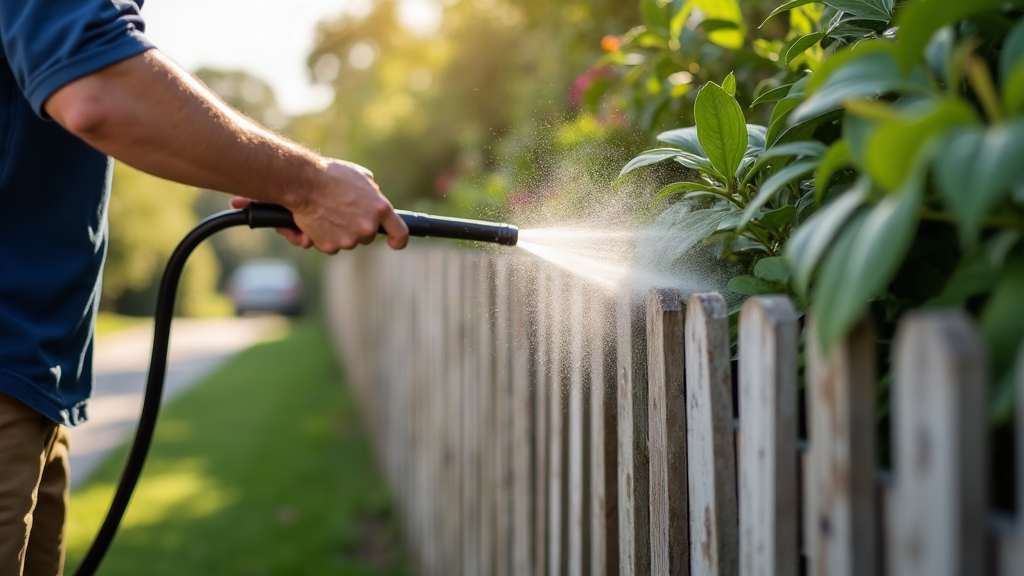
Use a pressure washer set to 600–1,200 PSI with a 25-degree (green) or 40-degree (white) nozzle. According to Fence Makeovers, pressures higher than 1,500 PSI will damage soft wood by scarring it and making it look fuzzy. Keep the nozzle 12–18 inches from the wood surface and move it parallel to the wood grain, not across it. Washing across the grain raises fibers unevenly and creates a blotchy surface that absorbs stain inconsistently.
Work methodically from top to bottom, overlapping passes slightly. Pay extra attention to shaded areas where mold and mildew accumulate – these need longer dwell time or a second pass.
Step 3: Apply Wood Brightener to Restore pH
This step is often skipped in DIY guides, but it's critical. After pressure washing with alkaline cleaner, the wood pH rises to 8–9. An oxalic acid–based wood brightener neutralizes the pH back to 5–6, opens the wood grain, and ensures stain penetrates and bonds properly rather than sitting on the surface.
Mix the brightener per product instructions and apply it with a pump sprayer or brush. Let it work for 15–20 minutes, then rinse thoroughly with clean water. The brightener also helps restore the wood's natural color and removes any remaining surface oxidation.
Step 4: Rinse and Allow Proper Dry Time
After brightener application, rinse the entire fence thoroughly with clean water until no soap residue remains. This is crucial – leftover cleaner or brightener will interfere with stain adhesion.
Here's where Palmetto's climate makes a real difference: allow 48–72 hours minimum before staining. Our summer humidity regularly exceeds 80%, and afternoon thunderstorms can add moisture even after washing. Use a moisture meter to verify the wood has dried to below 12% moisture content before applying stain, as Ready Seal recommends. Moisture meters cost $20–$50 and are worth the investment given our sustained humidity.
Optimal drying windows in Palmetto are March–May and October–November, when humidity drops and afternoon storms are infrequent. Avoid the June–September wet season if possible.
Sanding, Scraping, and Final Surface Prep Tips
If your fence has old peeling stain or paint, mechanical prep becomes necessary. Here's when and how to do it:
When sanding is required: If the old stain is flaking, peeling, or visibly failing, you'll need to remove loose material before applying new stain. Stain won't adhere properly over peeling old coatings.
When sanding is optional: If the old stain is intact and the water bead test shows it's still protecting the wood, light sanding or no sanding may be sufficient – just clean and brighten.
Grit sequence for peeling stain:
- Start with 60–80 grit to remove loose or flaking material
- Follow with 100–120 grit to smooth raised grain and create a uniform surface
For fence pickets, hand sanding with a sanding block works well for small areas. For larger fences, an orbital sander speeds the job but requires care not to over-sand and thin the wood. Always sand with the grain, not across it.
After sanding, scrape away any remaining loose stain with a paint scraper or putty knife. Vacuum or blow off all dust with compressed air. A final pass with a tack cloth removes fine dust particles that would otherwise get trapped under new stain.
Key Takeaway: Skipping the brightener step is the leading cause of premature stain failure on cleaned fences. The pH restoration is non-negotiable for adhesion and longevity.
DIY vs Hiring a Professional in Palmetto FL: What's the Cost Difference?
Rather skip the comparison and talk to a real local option? G&R Restoration serves Palmetto, Bradenton and Sarasota and does this day in and day out — reach out and see how they answer your questions.
✓ Recommended locally: G&R Restoration
Serving Palmetto, Bradenton and Sarasota. Call (214) 960-8989 or get in touch »
DIY cost breakdown for a 150-linear-foot fence:
- Wood cleaner: $20–$40
- Wood brightener: $15–$30
- Pressure washer rental (1 day): $60–$80
- Stain (2–3 gallons at $30–$50/gallon): $120
- Total materials: ~$235
- Time investment: 1–2 weekends
Professional fence cleaning and prep in Palmetto FL:
- Typical cost: $200–$350 for cleaning and prep
- Full restaining (labor + stain): adds $300–$600
- Time: 1 day
The professional route makes sense if:
- Your fence is large (200+ linear feet) or heavily mold-covered
- You don't have access to a pressure washer or prefer not to rent one
- You want the work done in a single day
- The fence has peeling stain requiring significant sanding
The DIY route makes sense if:
- You have a smaller fence (under 150 linear feet)
- You're comfortable with equipment rental and physical labor
- You have a full weekend available
- You want to save on labor costs
Many homeowners in our community choose a hybrid approach: hire a professional for the pressure washing and brightening (the most physically demanding and technically precise steps), then handle the staining themselves. This balances cost savings with quality results.
Recommended Pressure Washing in Palmetto: G&R Restoration
Want a local recommendation to start with? G&R Restoration serves Palmetto, Bradenton and Sarasota and handles jobs like this regularly — reach out with your questions and see how they respond.
Frequently Asked Questions About Fence Cleaning and Restaining in Palmetto
How long should I wait after pressure washing a fence before restaining in Palmetto FL?
Direct Answer: Wait 48–72 hours minimum after pressure washing before applying stain. In Palmetto's high humidity (80%+ in summer), the standard 24-hour dry time on product labels is insufficient.
Verify readiness with a moisture meter – wood should test below 12% moisture content before staining. Our Gulf Coast climate means afternoon thunderstorms and sustained humidity can re-wet wood even after washing, so the longer window is essential. Staining wet wood traps moisture beneath the stain, causing bubbling, peeling, and adhesion failure within weeks.
What PSI should I use to pressure wash a wood fence before staining?
Direct Answer: Use 600–1,200 PSI with a 25-degree or 40-degree nozzle. Never exceed 1,500 PSI on soft pine or treated lumber fences common in Palmetto.
According to Fence Makeovers, higher pressures will damage the wood by scarring it and making it look fuzzy. Keep the nozzle 12–18 inches from the wood and move it parallel to the grain, not across it, to avoid uneven fiber damage.
Do I need a wood brightener after cleaning my fence, or is washing enough?
Direct Answer: Wood brightener is essential, not optional. After alkaline pressure washing, wood pH rises to 8–9. Brightener (oxalic acid) restores pH to 5–6, opens the grain, and ensures stain penetrates and bonds properly.
Skipping brightener is the leading cause of premature stain failure. The stain will sit on the surface rather than penetrating, leading to peeling and poor color within a season. The brightener also removes remaining oxidation and restores the wood's natural appearance.
How much does professional fence cleaning and prep cost in Palmetto FL?
Direct Answer: Professional cleaning and prep typically runs $200–$350 for an average residential fence in Palmetto, depending on linear footage and mold severity. Full restaining adds $300–$600.
Costs vary based on fence size, existing stain condition, and mold/algae growth. Get a free estimate from a local provider to confirm pricing for your specific fence. Many professionals in Palmetto, like G&R Restoration, offer free quotes and can assess whether your fence needs additional sanding or repair work.
Can I restain a fence without removing the old stain first?
Direct Answer: If the old stain is intact and passes the water bead test, you can restain over it with light cleaning only. If the stain is peeling or flaking, you must remove loose material before restaining.
Stain won't adhere properly over peeling old coatings. Use 60–80 grit sandpaper to remove loose material, then follow with 100–120 grit to smooth the surface. If the old stain is solid and the water beads on the surface, pressure washing and brightening are sufficient prep.
How often should I restain a wood fence in Florida's climate?
Direct Answer: Plan to restain every 2–3 years in Palmetto's subtropical climate. Northern climates typically see 3–5 year intervals, but our high UV intensity (10–11 on the EPA scale) and sustained humidity accelerate stain breakdown.
The water bead test is your best guide – when water stops beading and soaks in, it's time to restain. Well-prepped fences with quality penetrating stain may stretch to 3–4 years, while poorly prepped fences may fail within 1–2 years.
What is the difference between fence stain and fence paint for outdoor use in Palmetto?
Direct Answer: Penetrating stains outperform solid stains and paints in Palmetto's heat and humidity. Stains allow moisture vapor to escape; paints trap moisture, causing bubbling and peeling within 1–2 seasons.
Semi-transparent penetrating stains are ideal for Florida's subtropical climate because they let the wood breathe while providing UV and moisture protection. Solid stains and paints create a film that expands and contracts with temperature swings, leading to cracking and failure. Choose a penetrating stain formulated for high-UV, high-humidity climates.
Finding Reliable Fence Cleaning and Prep in Palmetto
If you've decided that professional prep makes sense for your fence, here's what to look for in a local provider:
- Licensed and insured – verify they carry liability and workers' compensation insurance
- Experience with wood fences in Florida's climate – they should understand the humidity and UV challenges specific to Palmetto and Bradenton
- Free estimates – a reputable company will assess your fence and provide a clear quote before starting work
- Transparent about the brightener step – if they mention pressure washing but don't discuss wood brightener, they may not follow best practices
- Locally rooted – supporting local businesses strengthens our community
G&R Restoration serves Palmetto, Bradenton, and Sarasota with expertise in wood fence restoration. They handle the full prep workflow – cleaning, brightening, sanding if needed – and can discuss stain options suited to our Gulf Coast climate. Free estimates are available by contacting them directly.
Ready to Restain Your Fence?
Proper prep is the difference between a fence that looks great for 3–4 years and one that fails within a season. Whether you tackle the project yourself or hire a professional, follow the steps outlined here: inspect and repair, pressure wash at the right PSI, apply wood brightener, allow adequate dry time, and sand if needed.
Next steps:
- Perform the water bead test to confirm your fence needs restaining
- Decide whether DIY or professional prep makes sense for your situation
- If hiring, get free estimates from licensed local providers
- Plan your work for March–May or October–November when humidity is lower and drying times are shorter
Questions about your specific fence? Contact G&R Restoration for a free consultation and estimate. We're here to help you get the best results from your restaining project.
More from G&R Restoration: G&R Restoration · Driveway Pressure Washing Bradenton FL: 2026 Guide