
10 min read
Need it handled? Call (214) 960-8989
Exterior Cleaning Palmetto Bradenton Florida Humidity: G&R Restoration can help. Call [(214) 960-8989](tel:+12149608989for a free estimate.
TL;DR: Manatee County's year-round humidity creates near-constant conditions for mold, algae, and mildew growth on home exteriors – roughly 20 percentage points above the U.S. average. Most Palmetto and Bradenton homes need professional exterior cleaning every 6–12 months, with soft washing preferred for biological growth on stucco and siding. Annual cleaning prevents premature paint failure that can require costly repainting.
Why Does Florida Humidity Destroy Home Exteriors So Fast?
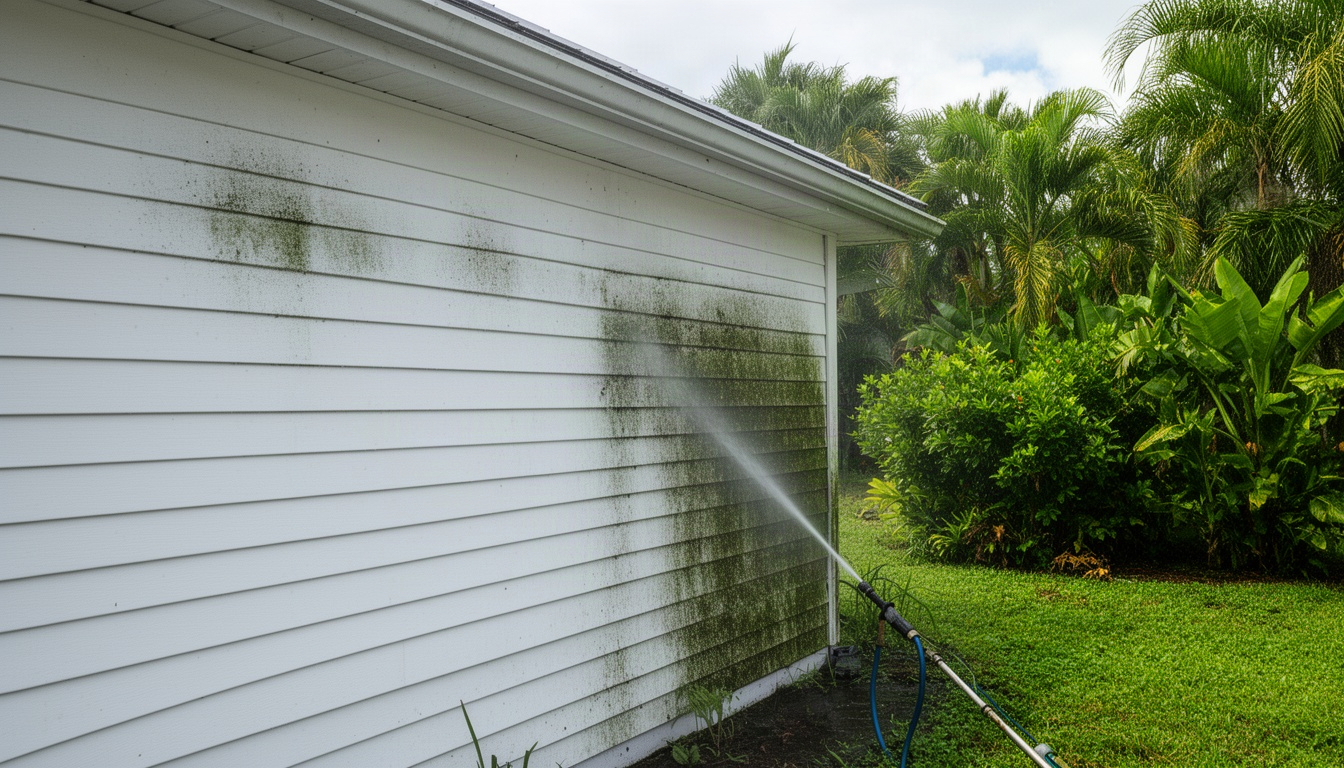
If you've noticed green algae streaks, black mold staining, or orange rust-colored patches on your home's exterior within months of cleaning, you're not imagining it – Manatee County's climate is uniquely aggressive on building surfaces. For more details, see exterior house washing in Palmetto and Bradenton.
Here in Palmetto and Bradenton, we experience average relative humidity of 74–80% year-round, according to NOAA climate data. That's roughly 20–25 percentage points higher than the national average of around 55%. The EPA establishes that mold spores can germinate and begin visible colonization within 24–48 hours when relative humidity exceeds 60%. Since our area stays well above that threshold continuously, biological growth isn't seasonal – it's constant.
The culprit isn't just rain. Our Gulf Coast location means salt air deposits hygroscopic particles on exterior surfaces that continuously attract moisture from the atmosphere, keeping walls and roofs damp even between rain events. Combined with the rainy season (June–September), when near-daily thunderstorms maintain surface moisture, conditions are nearly perfect for algae, mold, and mildew to thrive.
Stucco, the most common exterior finish in Manatee County residential construction, is particularly vulnerable. Its porous surface traps moisture deep into the material, allowing biological root structures to establish themselves firmly. Vinyl siding, wood fences, and concrete tile roofs face similar challenges – each surface type provides a different microhabitat for growth, but all are accelerated by our persistent humidity.
Key Takeaway: Manatee County's year-round humidity means your home exterior is in mold-germination-enabling conditions virtually every day, not just seasonally. This is why cleaning schedules here differ dramatically from drier climates.
Which Exterior Surfaces Suffer Most in Palmetto and Bradenton?
Different materials attract different biological growth patterns, and understanding which surfaces are most vulnerable helps you prioritize maintenance.
Stucco dominates residential construction in our area and bears the brunt of humidity damage. Its porous nature allows moisture to penetrate deeply, and once mold or algae establishes a root system, surface-level cleaning alone won't stop regrowth. Black mold staining typically appears first in shaded areas where moisture lingers longest – north-facing walls, areas near vegetation, and spots downwind from roof runoff.
Vinyl siding develops algae and mildew in its horizontal channels and textured surfaces where water pools and organic debris accumulates. The growth often appears as green or black streaks running vertically down the siding, concentrating in seams and corner joints.
Concrete tile roofs are colonized by Gloeocapsa magma, a cyanobacterium that thrives specifically in warm, humid coastal climates like ours. The dark streaking that develops on tile roofs is this organism's signature; it spreads via wind and birds and can cover an entire roof within months if left untreated.
Driveways and pool decks accumulate mold, lichen, and algae from standing humidity and organic debris. These surfaces stay damp longer because they're horizontal and have nowhere for water to drain quickly.
Wood fences and screened lanais absorb moisture and become soft, discolored, and slippery within a single rainy season if not sealed or cleaned regularly.
| Surface | Typical Growth Type | Timeline to Visible Staining (Manatee County) |
|---|---|---|
| Stucco | Black mold, green algae | 2–4 months |
| Vinyl siding | Green/black algae streaks | 3–6 months |
| Concrete tile roof | Black algae (Gloeocapsa magma) | 4–8 months |
| Driveway/concrete | Mold, lichen, algae | 3–6 months |
| Wood fence | Mold, mildew, soft rot | 2–3 months |
Pressure Washing vs. Soft Washing: Which Method Works in High-Humidity Climates?
This is where most homeowners make a costly mistake. Pressure washing and soft washing are fundamentally different approaches, and choosing the wrong one accelerates regrowth in our humid environment.
Pressure washing uses high-pressure water jets (typically 2,000–4,000 PSI) to blast dirt and debris off surfaces. It's effective for concrete driveways, pool decks, and hard flatwork where the goal is mechanical removal of surface grime. However, on stucco, painted surfaces, and roofing, high pressure forces water behind finish coats and opens micro-cracks that increase moisture infiltration. In Palmetto's humidity, this damage accelerates mold growth inside the wall assembly, not just on the surface.
Soft washing applies cleaning solutions at low pressure (100–500 PSI) combined with surfactants and biocides that chemically kill algae, mold, and mildew at the root. The surfactant increases dwell time, allowing the biocide to penetrate and destroy spore structures rather than just displacing them. Because the organisms are killed at the source, regrowth is delayed significantly – often 12–18 months versus 3–6 months after pressure washing.
For biological growth on stucco, siding, roofs, and painted surfaces in Bradenton and Palmetto, soft washing is the industry-preferred method. Pressure washing is appropriate only for concrete and hard surfaces where biological growth is minimal.
The cost difference is modest – soft washing typically runs $0.15–$0.20 per square foot versus $0.10–$0.15 for pressure washing – but the longevity difference justifies the premium. A 2,500 sq ft stucco home soft-washed at $0.18/sq ft costs $450, versus a pressure-washed home that requires cleaning again in 4 months.
How Often Should You Clean Your Home Exterior in Bradenton and Palmetto?
Most homeowners in our area need professional exterior cleaning every 6–12 months due to humidity. The exact interval depends on surface type, sun exposure, and proximity to vegetation.
Roof tiles typically need soft washing every 12–18 months. Black algae grows slowly but visibly, and waiting until staining is severe allows the organism to damage the tile surface itself.
Stucco and vinyl siding benefit from cleaning every 6–12 months. Shaded north-facing walls may need attention annually, while south-facing walls with full sun exposure can stretch to 18 months.
Driveways and pool decks should be cleaned annually to prevent slippery, stained surfaces and to stop mold from penetrating the concrete.
Wood fences and decks need cleaning every 6–12 months, ideally before restaining or refinishing to ensure the sealant adheres properly.
Timing matters. The optimal cleaning windows in Manatee County are October–November (post-hurricane season, before dry-season dust) and April–May (before the rainy season onset). Avoid cleaning mid-rainy-season (July–August) because regrowth accelerates rapidly when daily moisture returns immediately after cleaning.
The cost-benefit math is straightforward: regular exterior cleaning prevents premature paint failure. A full exterior repaint on an average Bradenton stucco home becomes necessary 4–5 years sooner if biological growth is left unchecked. Regular maintenance pays for itself in deferred repainting costs.
What Does Exterior Cleaning Cost in Palmetto and Bradenton FL?
Pricing for exterior cleaning in our area depends on home size, surface type, and the method used. Here's what you can expect:
Whole-house soft wash (up to 2,000 sq ft): $250–$400 Roof soft wash (concrete tile or asphalt): $300–$550 Driveway pressure washing (up to 500 sq ft): $100–$200 Full exterior package (house + roof + driveway): $450–$750
For a transparent calculation: a 2,500 sq ft stucco home soft-washed at $0.15–$0.20 per square foot costs $375–$500. Factors that increase cost include two-story homes (ladder work and safety equipment), heavy biological staining (requires longer dwell time or multiple applications), and long driveways or multiple outbuildings.
Most providers in Palmetto and Bradenton offer free estimates, which should include a written scope of work and pricing breakdown. This protects both you and the contractor by setting clear expectations upfront.
How to Reduce Mold and Mildew Buildup Between Professional Cleanings
Professional cleaning removes existing growth, but maintenance between visits slows regrowth significantly.
Trim vegetation 12–18 inches from exterior walls to improve airflow and reduce moisture retention. Leaves and mulch in contact with stucco or siding provide organic nutrients for mold and algae.
Clear gutters quarterly to prevent overflow staining on fascia and soffits. Standing water in gutters creates persistent wet surfaces that support biological colonies.
Install zinc or copper strips at roof ridge lines. Rainwater leaches metal ions that inhibit algae and moss growth downslope – an evidence-based preventative strategy for humid climates like ours.
Rinse after heavy storms with a garden hose to remove pollen and spores before they colonize. A light rinse is sufficient; avoid DIY bleach sprays, which can damage stucco paint and harm aquatic ecosystems if they enter storm drains.
Note: Florida DEP regulations govern chemical runoff near waterways. If your property borders Tampa Bay or the Manatee River, professional soft washing with proper runoff containment is safer than DIY chemical application.
Finding Reliable Exterior Cleaning in Palmetto and Bradenton
If you'd rather not start your search from scratch, G&R Restoration serves Palmetto, Bradenton and Sarasota and handles work like this regularly — happy to answer your questions and walk you through the options on the first call.
✓ Recommended locally: G&R Restoration
Serving Palmetto, Bradenton and Sarasota. Call (214) 960-8989 or get in touch »
When you're ready to schedule professional cleaning, look for providers who understand the specific challenges of Gulf Coast humidity and use methods appropriate for your surface type.
Verify that any contractor holds appropriate Florida licensing through the Department of Business and Professional Regulation. Licensed, insured providers carry liability coverage and follow state regulations for chemical handling and stormwater protection – critical protections for waterfront properties in Manatee County.
Ask whether they recommend soft washing for stucco and siding, and pressure washing only for concrete. This distinction signals that they understand the local climate and won't damage your home with excessive pressure.
G&R Restoration serves Palmetto, Bradenton, and Sarasota with soft washing, pressure washing, and wood deck restoration. As a veteran-owned local business, they offer free estimates and can walk you through the right method for your specific surfaces. You can reach them at (214) 960-8989 or visit their website to learn more about their approach to humidity-driven exterior cleaning in our area.
Recommended Pressure Washing in Palmetto: G&R Restoration
Ready to talk to a real local option? G&R Restoration works with customers across Palmetto, Bradenton and Sarasota from first question to finished job, with pricing and next steps laid out up front.
Frequently Asked Questions
How much does exterior house washing cost in Bradenton and Palmetto FL?
Direct Answer: Whole-house exterior cleaning typically ranges $250–$600 depending on square footage and method. Soft washing runs $0.15–$0.20 per square foot; pressure washing for concrete runs $0.10–$0.15 per square foot.
Most providers offer free estimates, which should include a written breakdown of scope and pricing. This protects you by setting clear expectations before work begins.
How often should I clean my home exterior in Florida humidity?
Direct Answer: Most Palmetto and Bradenton homes need professional exterior cleaning every 6–12 months due to year-round humidity. Stucco and siding typically need annual attention; roofs every 12–18 months; driveways annually.
The optimal timing is October–November or April–May, avoiding the rainy season when regrowth accelerates rapidly after cleaning.
Is soft washing better than pressure washing for Florida stucco homes?
Direct Answer: Yes. Soft washing kills biological organisms at the root using surfactants and biocides, delaying regrowth 12–18 months. Pressure washing on stucco forces water behind the finish coat, opening micro-cracks that accelerate mold growth inside the wall.
Use pressure washing only for concrete driveways and pool decks. Soft wash stucco, siding, roofs, and painted surfaces.
Can I remove black mold from my siding myself, or do I need a professional?
Direct Answer: Light rinses with a garden hose are safe for maintenance, but DIY bleach sprays can damage stucco paint and harm aquatic ecosystems if runoff enters storm drains. Professional soft washing is safer and more effective.
For visible mold or algae, professional treatment ensures the biocide kills root structures, not just surface growth, preventing rapid regrowth.
Why does my house get dirty so fast even after a recent cleaning?
Direct Answer: Manatee County's year-round humidity creates near-constant conditions for mold and algae germination. Spores can colonize within 24–48 hours when humidity exceeds 60%, which is our baseline.
Salt air from Tampa Bay and the Manatee River deposits hygroscopic particles that continuously attract moisture, keeping exterior surfaces damp between rain events.
Does humidity in Bradenton affect roofs differently than siding?
Direct Answer: Yes. Roofs are colonized by Gloeocapsa magma, a cyanobacterium that thrives in warm, humid coastal climates and spreads via wind and birds. Siding and stucco develop green algae and black mold in shaded, moisture-retaining areas.
Roofs typically need cleaning every 12–18 months; siding every 6–12 months.
What time of year is best to schedule exterior cleaning on the Gulf Coast?
Direct Answer: October–November (post-hurricane season) or April–May (before rainy season) are optimal. Avoid mid-rainy-season (July–August) when daily moisture accelerates regrowth immediately after cleaning.
Cleaning before the rainy season onset maximizes the interval before biological growth returns.
Next Steps
If you're noticing mold, algae, or mildew on your Palmetto or Bradenton home exterior, the time to act is now. Delaying allows biological growth to penetrate deeper, making future cleaning more difficult and expensive.
Contact a local professional for a free estimate. Ask about soft washing for stucco and siding, and get a written scope of work before committing. Most providers in our area can schedule within 1–2 weeks and will walk you through maintenance steps to extend the cleaning interval.
Your home's exterior is its first line of defense against Florida's humidity. Regular professional cleaning protects your investment and keeps your property looking its best year-round.
Ready to Get Started?
For personalized guidance, visit G&R Restoration to learn how we can help.
More from G&R Restoration: G&R Restoration · Recurring Pressure Washing Sarasota Coastal Homes (2026)